


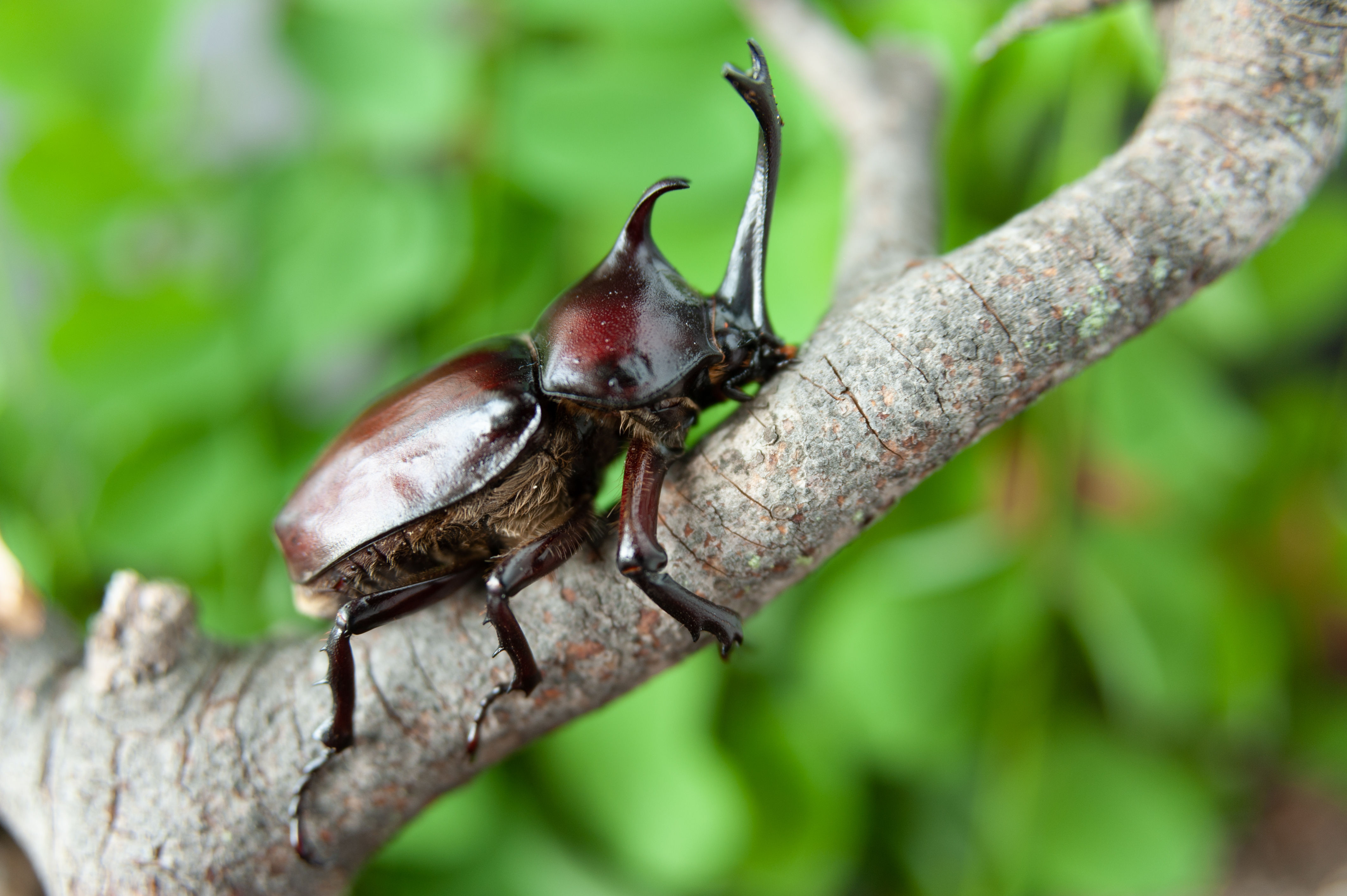
Tripoxylus dichtotomus 3rd Instar x 1
£15.00Price
Trypoxylus dichotomus – Japanese Rhinoceros Beetle (UK-Bred)
Powerful, impressive, and full of character, Trypoxylus dichotomus — the Japanese Rhinoceros Beetle — is one of the most recognisable beetles in the hobby. Famous for their large forked horns and incredible strength, these beetles make an excellent display species and a rewarding breeding project for enthusiasts of all experience levels.
These UK-bred specimens are healthy, robust, and raised under carefully maintained conditions.
What makes them special
- Iconic horned beetle: Males develop spectacular forked horns used to wrestle with rival males over access to females and feeding spots.
- Impressive size: Adults commonly reach 6–8 cm.
- Active and fascinating: Adults are strong climbers and very entertaining to observe when feeding or interacting.
- Captive-bred in the UK
Care & housing
- Enclosure: A spacious enclosure with good ventilation and a deep layer of decayed hardwood substrate. Larvae can be housed either communally (with lots of space and food) or singly. When housing singly they can be kept in smaller pots/tubs with a few ventilation holes in the lid. When housing in smaller pots it is important that they are checked and substrates changed more frequently than when housing in larger containers.
- Temperature & humidity: Larvae are best kept around 20 - 24 °C in damp but not saturated substrate. Adults can comfortably tolerate warmer temperatures up to 28 degrees with highter temperatures being tolerated for short periods of time.
- Feeding: Adults feed readily on beetle jelly and soft fruits such as banana, apple, and pear.
- Larvae: Grubs should be kept in deep fermented hardwood substrate (Flake soil), which acts as both food source and burrowing material. Larger larvae are best housed individually to avoid competition.
Life cycle
- Development: Larvae are fast growing compared to many giant beetles (larvae will develop in approx 10 - 12 months) and can reach impressive sizes before pupation.
- Pupation: Mature larvae construct large pupal chambers within the substrate before emerging as adults.
- Breeding: Females readily lay eggs in well-prepared substrate under suitable conditions.